
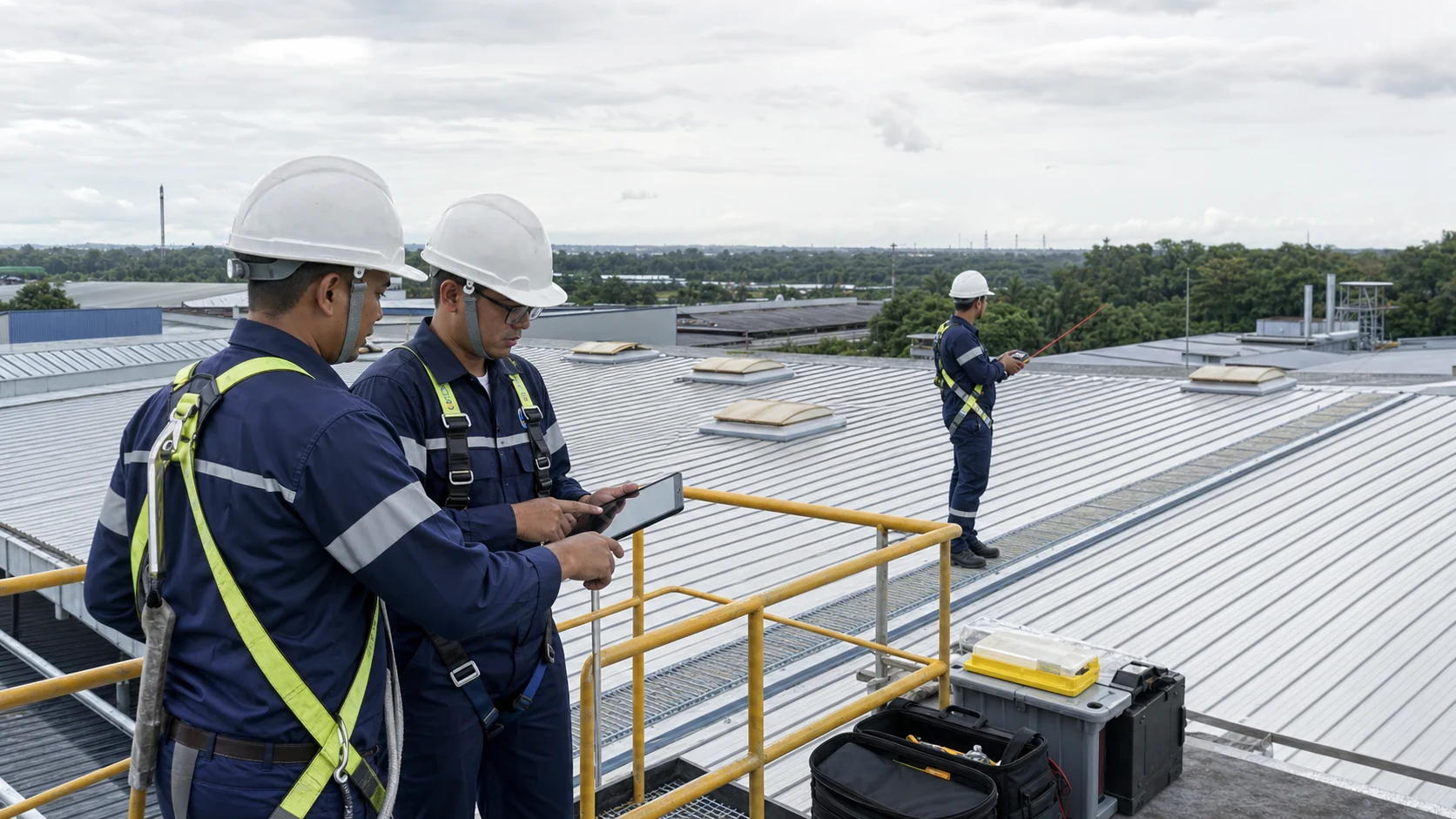
For most sites, factory roof cleaning cost in Malaysia is best treated as a site-specific planning question rather than a single rate. The work is shaped by what is on the roof, how it can be reached and what is happening underneath.
Factory roof cleaning cost cannot be estimated reliably from floor area alone. The cleanable roof area, material, access route, contamination, drainage, production restrictions and required documentation can change the amount of work.
A useful quotation states the measured zones, proposed method, client responsibilities, assumptions and exclusions. It should also explain what condition would require a variation before extra work is carried out.
Quick answer: which factors affect cost most?
The largest variables are usually roof area and geometry, safe access, surface condition, contamination, water and drainage setup, work timing, site controls and the expected finish.
Two factories with similar footprints can have very different scopes when one has clear walkways and drains while another has fragile sheets, skylights, multiple levels and active production below.
1. Measured cleaning area and roof layout
Separate the roof into work zones and exclusions. Include ridges, valleys, parapets, gutters, plant areas and solar arrays only when they are part of the scope.
Disconnected zones and repeated setup can add time even when the total square metres are modest. Drawings help, but current photographs and site verification remain important.
Extensions, lean-to roofs and canopies may each have a different sheet profile, pitch or access point. Name every roof section on a simple plan or satellite image and state which are included.
2. Access and fragile-surface controls
Stairs, ladders, roof hatches, walkways, edges and fragile areas affect crew movement and equipment setup. These controls should be priced rather than treated as an afterthought.
If the condition or loading capacity is uncertain, the client may need a roof specialist before cleaning is planned.
Polycarbonate panels, rooflights and weak sheets decide where people and equipment can safely go, so they should be marked on the roof plan before any method is chosen. Extensive fragile zones may need guarded routes or a method that reduces foot traffic on the roof surface.
3. Contamination and achievable result
Loose dust, moss, bird deposits, industrial fallout and oily residue need different treatment. A test area can help confirm whether the proposed method is effective and surface-compatible.
Cleaning does not repair corrosion, failed coating or leaks. The quotation should separate those conditions from removable contamination, and any that are visible can be noted in the records so a roof specialist can review them.
Roof coatings also limit what can be used. Water pressure, brushes and any cleaning agent should be matched to the roof finish, and the expected result should be agreed in writing. General dirt removal and treatment of long-standing staining are different scopes.
4. Production window and site coordination
Work around loading bays, air intakes, electrical equipment and active production may need phased zones, escorts or shutdown windows. Weekend or night work can change mobilisation and supervision.
State induction, security and permit-to-work requirements before bids are finalised so they are included consistently.
List exhaust outlets and ventilation intakes separately. Some may need to be isolated or covered while nearby zones are cleaned, which may require your maintenance team at agreed times.
5. Water, drainage and reporting
Water-source distance, hose routing, runoff, blocked drains and debris disposal can change the equipment and time required. Identify who provides water and where discharge is permitted.
Before-and-after photographs, zone records, exclusions and visible-defect notes are useful deliverables. Specify them when requesting a price.
6. Cleaning method and approvals
Skybot recommends the method after reviewing the roof, and many sites use a combination. Drone-assisted cleaning may suit broad open roof sections where flight space can be controlled. Protected roof access may be needed for gutters, spot treatment and areas around equipment, while low roofs and canopies may be reached from firm ground.
Where a drone is proposed, the approval route must match the site, dates, aircraft and operation, and property permission, exclusion zones, weather limits and water routing still need planning. The drone cleaning permissions guide and the drone cleaning versus rope access comparison explain why the method should follow site suitability rather than the other way round.
What to prepare before requesting a quotation
A consistent brief makes proposals easier to compare. Before contacting contractors, gather:
- the full site address and a roof plan, drawing or satellite image with sections labelled;
- recent wide photographs of each section, plus close-ups of staining and gutters;
- the roof material, and any known leaks, corrosion or previous repairs;
- the location of skylights, rooflights and any areas you already treat as fragile;
- rooftop plant, exhausts, intakes and solar arrays;
- the roof access route and ground staging area;
- water points, drains, outlets and any discharge rules on site;
- production hours, shutdown dates and areas below that cannot be interrupted; and
- your induction, permit-to-work, reporting and acceptance requirements.
The site assessment guide describes what a contractor typically checks on site once this information has been reviewed.
How to compare quotations fairly
Totals are only comparable when the scopes match. Check each proposal against the same questions:
- Which roof sections, gutters and plant areas are included, and which are excluded?
- Which method is proposed for each zone, and who decides where fragile-surface controls apply?
- What finish is expected, and is a test area included?
- What does the client provide: water, power, escorts, shutdown time or storage space?
- What working hours and mobilisations are assumed?
- Which conditions would trigger a variation, and how would it be agreed?
- What records are handed over at completion?
A lower figure that leaves out gutters, access controls or disposal may cost more once those items are added later. The facade tender checklist applies the same principle of pricing an identical scope.
Common scope gaps
- Gutters and outlets assumed to be included but not listed
- Canopies, lean-to roofs or a second roof level left off the plan
- No allowance for covering intakes or isolating equipment
- Debris disposal and waste removal left unassigned
- Solar arrays on the roof neither included nor excluded
- No written acceptance standard for the finished roof
Where panels are part of the job, see Skybot’s commercial solar panel cleaning page.
Useful sources and related Skybot guides
DOSH work-at-height guidance, industrial rooftop cleaning guide, drone cleaning overview, Skybot quote form.
Common mistakes
- Pricing only from factory floor area
- Ignoring repeated mobilisation between roof levels
- Treating repair conditions as cleaning scope
- Leaving working hours until after award
- Comparing totals without reviewing assumptions
FAQ
Is factory roof cleaning priced per square metre?
It may use area as one input, but access, contamination, controls and operating restrictions still affect the total scope.
Can drone cleaning reduce factory roof cleaning cost?
It may change access needs on suitable broad areas, but flight, water, ground controls and approvals still require planning.
Does the price include gutters?
Only when the quotation says so. Gutter access, debris removal and disposal can be separate work.
Can a factory roof cleaning price be confirmed from photos?
They can support an initial estimate. Complex roofs may need measurements, records or a site visit.
Can the roof be cleaned while production continues?
Often, but it depends on the site. It may be possible if zones can be phased around intakes, loading bays and equipment. Some areas may still need a shutdown window agreed before the quotation is finalised.
What should I send for a factory roof cleaning quote?
Send the site location, roof photographs, a roof plan or satellite image, the roof material, the approximate area and any operating restrictions such as production hours or shutdown windows.
Request a site-specific review
Skybot Solution can review commercial exterior-cleaning enquiries in Johor. Send the details listed above through the Skybot quote form.
For a factory-specific quote, see Skybot’s industrial rooftop cleaning service.