
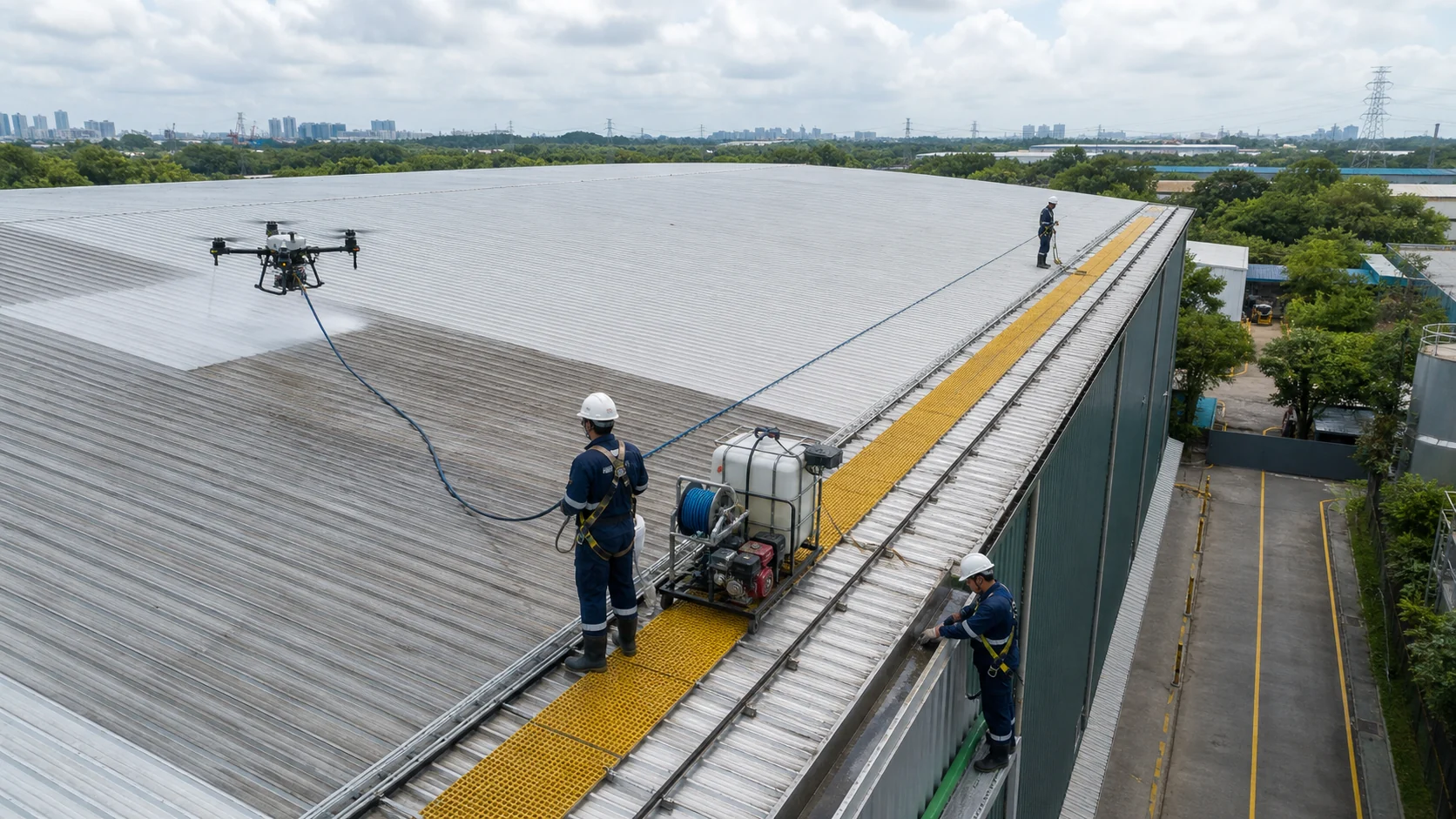
Choosing a method for warehouse roof cleaning in Malaysia is a site-planning question before it is an equipment question.
The work may use drone-assisted cleaning, protected roof access, platform or ground equipment, or a combined method. The right choice depends on roof material and condition, contamination, fragile zones, access, flight space, drainage and the activity below.
Method comparisons should focus on the full site plan and expected result. A tool that is efficient on one open roof may be unsuitable around fragile panels, air intakes, tight obstructions or bonded deposits.
Quick answer: how should methods be compared?
Compare surface contact, reach, personnel exposure, setup area, water control, weather limits, detail capability and the approvals or competency requirements for each method.
Divide the roof into zones. Broad open areas, gutters, roof edges, skylight runs, equipment platforms and detailed deposits may need different approaches.
Start with a roof zone map
Before any method is proposed, the roof should be mapped. The map should show:
- skylights, polycarbonate panels, rooflights and any sheets known to be weak or corroded;
- gutters, outlets, downpipes and areas where water tends to pond;
- rooftop plant, exhausts, ventilation intakes, cable trays and electrical equipment;
- solar arrays, if the roof has them;
- existing walkways, access points, edge protection and anchor points; and
- the loading bays, vehicle routes and work areas directly below each zone.
Fragile areas come first because they decide where people and equipment can safely go. A route that looks open in a photograph may cross several fragile panels. Once these are marked, the remaining roof can be split into zones that suit each method.
Drone-assisted cleaning
Drone-assisted cleaning may suit large, open roof areas where reducing foot traffic on the roof surface is valuable and flight space can be controlled. The cleaning tool reaches the roof while the pilot and support crew work from a planned position on the ground or another safe location.
It still needs a take-off and landing area, ground crew, hose routing, weather limits and an approval review. It may not suit detailed hand work, enclosed areas, strong wind, sensitive surfaces or locations where overspray cannot be controlled.
Protected roof access
Protected roof access places trained personnel on the roof using guarded routes, fall protection and fragile-roof controls. It allows close inspection and physical contact with deposits, so it may suit gutters, spot treatment, bonded marks and areas around rooftop equipment.
It also puts people on the roof, so skylights, edges, roof sheet condition, heat, slippery surfaces and movement routes need careful planning. A low roof is not automatically a simple roof: fragile panels and edges still need the same planning and controls.
Platform or ground equipment
Platform or ground equipment may suit low roofs, canopies, loading-bay awnings and roof edges that can be reached safely from firm ground.
Reach, ground loading, overhead obstacles, vehicle traffic and hire duration can limit suitability. It rarely covers broad central roof areas, and the setup position may block loading bays or driveways.
Combined method and zone planning
Many warehouse sites use a combined method. Drone-assisted cleaning may cover suitable open sections, protected roof access may handle gutters, edges and persistent marks, and platform equipment may reach canopies from the ground. The quotation should show which method covers each zone.
Clear boundaries matter. The scope should say where one method stops and another starts, what is excluded, and how the finish of each zone will be checked. The client should compare the combined programme, controls, finish and reporting rather than selecting one method from a headline claim.
Operations below the roof
Many warehouses and logistics facilities keep operating during roof cleaning, so the plan has to fit around daily activity. Loading bays, forklift routes, delivery vehicles, staff walkways and stored goods near roof edges all affect where exclusion zones can go and when each zone can be cleaned.
Ventilation intakes and roof fans may need to be switched off or protected while nearby zones are cleaned. The facility team should confirm which areas cannot be interrupted and who can authorise temporary closures on the day.
Water, runoff and drainage
Cleaning water and loosened dirt have to go somewhere. Gutters, outlets and drains should be checked before work starts, because blocked outlets can cause ponding or overflow onto loading areas, goods or equipment below.
The plan should confirm the water source, hose routes, trip hazards, and where runoff will discharge. Pressure and water use should be matched to the roof finish, and a small test area may be sensible where a coating is older or its condition is unclear.
Weather and approvals
Wind on an open roof can differ from ground-level conditions, and wet sheeting increases slip risk. Each method needs defined weather limits and stop-work rules.
For drone-assisted work, the approval route must match the site, dates, aircraft, payload and operation. CAAM’s current public guidance describes Standard ATF as a route for low-risk operations with no spraying or dispensation, so cleaning work needs a specific review. A previous approval is not blanket permission. The drone cleaning permissions guide explains the checks in more detail.
Planning checklist
Alongside the zone map and the site details listed below, confirm:
- Open areas versus detailed zones
- Personnel and equipment access
- Flight and ground-control space
- Weather and stop-work rules
- Zone-by-zone method and acceptance
What to send for a quote
Send the following with your first enquiry:
- site location and building name;
- recent roof photographs, including close-ups of the dirt or deposits;
- a roof plan or satellite image with target areas marked;
- roof material, approximate area and any known damage or leaks;
- locations of skylights, rooftop plant and solar panels;
- water source and drainage notes;
- operating hours, loading-bay activity and any shutdown windows; and
- site rules, induction requirements and a responsible contact.
Photographs support an initial review, but a firm proposal may still need a site assessment where roof condition, access or risk cannot be confirmed remotely.
Useful sources and related Skybot guides
DOSH work-at-height guidance, industrial rooftop cleaning guide, factory roof cost factors, drone cleaning versus rope access, Skybot quote form.
Common mistakes
- Forcing one method across every roof zone
- Planning routes before skylights and fragile sheets are mapped
- Ignoring the condition of old roof sheets
- Choosing a drone before checking flight and runoff space
- Assuming direct access is simple because the roof is low
- Leaving gutter and outlet checks until the cleaning day
- Comparing equipment instead of completed scope
FAQ
Which warehouse roof method is cheapest?
There is no universal answer. Total cost depends on setup, access, area, condition, fragile zones, controls and required finish.
Can a drone clean a roof with skylights?
Drone-assisted cleaning can reduce the need for people to walk on some roof areas, but skylights and fragile panels still need to be identified and protected. Some roofs are better suited to protected access or a combined method.
Can a drone clean gutters?
Detailed gutter work and debris removal may require protected roof access or another tool. Include it as a separate zone.
Is low-pressure cleaning always safe for roof coatings?
No. Compatibility depends on the material, condition, water and technique. A test area may be needed.
Can work continue during warehouse operations?
Often, but it depends on the site. It needs controls around loading bays, vehicle routes, air intakes, people, equipment and runoff. Work zones, timing and any shutdowns should be agreed before mobilisation.
Should warehouse roof cleaning methods be combined?
Yes, when different roof zones have different access or finish requirements. The scope should show clear boundaries between methods.
Does warehouse roof cleaning include inspection or repair?
No. Cleaning removes contamination from agreed areas. Defects noticed during the work can be reported, but inspection, leak investigation and repair are separate scopes unless the proposal says otherwise.
Request a site-specific review
Skybot Solution can review commercial exterior-cleaning enquiries in Johor. Send the location, photographs, target areas, access notes and expected result through the Skybot quote form.
Warehouse roofs are covered by Skybot’s industrial rooftop cleaning service.