
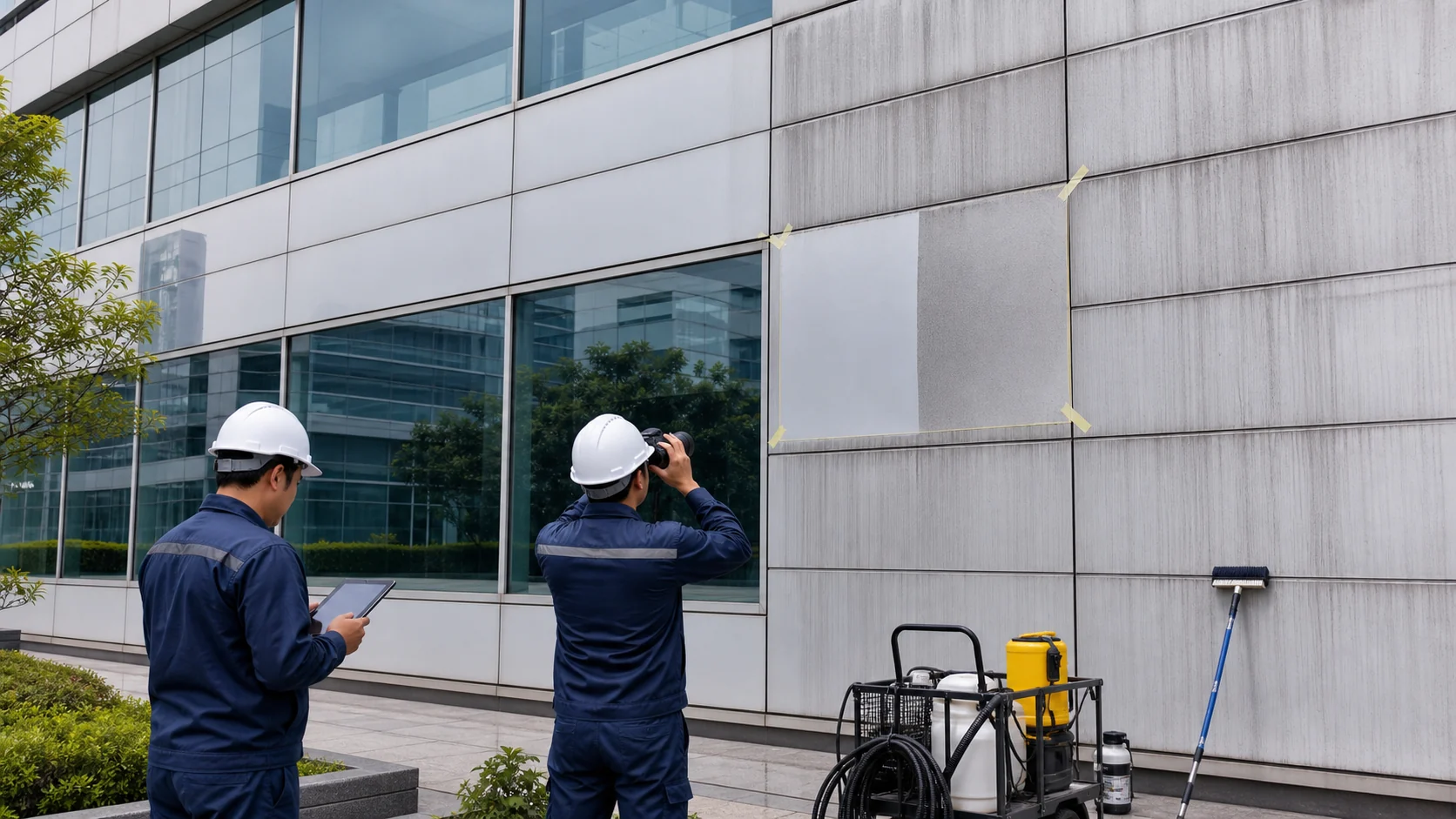
A facade cleaning test patch is a controlled trial on a small, representative section of a building before full-scale work is agreed. It lets the building manager and the contractor see how the surface, stain, water, pressure, tools and any cleaning material actually behave.
A test patch does not predict how every elevation will look. Its value is an observed, recorded result that gives both sides a clearer basis for the method, limits and acceptance standard in the proposal.
Quick answer: when is a test patch sensible?
A test patch may be recommended where the coating, stain response or expected finish is uncertain. Typical situations include:
- The glass, cladding or coating type is unknown, or its maintenance history is incomplete.
- Staining has built up over time and it is unclear whether it is surface dirt, mineral marks, organic growth or damage.
- A cleaning material, rather than water alone, is being considered.
- The client and contractor have different expectations of what a clean facade should look like.
- The area is large enough that the wrong method would cause significant rework.
Where the surface is well documented, soiling is light and the expected result is straightforward, a test patch may add little. It is a tool for reducing uncertainty, not a step every project needs.
Choosing the test area
The test area should represent the condition most of the facade is in. A section that is unusually clean, freshly repaired or badly damaged gives a misleading reference point.
Good candidates have the typical material and staining and are visible from where the result will later be inspected. If the building has clearly different zones, such as glazing above painted concrete, the team may agree on more than one small test area rather than stretching one result across very different surfaces.
The location should also be practical to reach under the site’s normal controls, away from busy entrances where possible, and clearly marked.
What gets tested
A useful test checks the same things that will decide the full-scale method, written down beforehand so the result can be repeated.
- Method and access: the tools and access approach intended for the main work. If drone-assisted cleaning is proposed, the test is most informative with the same setup, subject to the site assessment and applicable approvals.
- Pressure and distance: the pressure range, distance and number of passes, within what the surface and any manufacturer guidance allow.
- Chemistry: if a cleaning material is proposed, its product details, dilution, dwell time, rinsing and compatibility with the glass, coating, frames and seals, plus runoff control around drains and landscaping.
- Water quality: the water source and any treatment, which can affect spotting on glass.
- Finish: how the surface looks once it has dried, including residue, streaking, spotting, colour change and any effect on coatings or sealant.
When comparing options, change one variable at a time, or it becomes difficult to tell which change made the difference. Testing is not a reason to escalate treatment until a stain moves; if a stain responds only to methods that risk the surface, that is a finding in itself.
Who should attend and sign off
The contractor’s supervisor responsible for the method should carry out or oversee the test. On the client side, the person who will accept the finished work should see the result, whether the building manager, facilities lead or a representative of the management corporation or owner. Where compatibility is in question, input from a facade consultant or coating supplier can help.
Sign-off works best in writing: a short record of the method tested, the result, the limitations observed and whether it is accepted, needs adjustment or points to another method or specialist.
How to record the result
Start with the condition before cleaning. Take wide and close-up photographs, mark the exact boundary, identify the material and stain, and note the weather and lighting. Record visible scratches, coating failure, cracks or sealant defects at this stage so that they are not later attributed to the test.
After the test, inspect once the surface has dried where practical, because wet glass can hide spotting or streaks. Photograph the result from the same positions, ideally at normal viewing distance, and note the lighting, since a facade can look different in sun and shade.
Dated photographs and brief notes are usually enough, provided someone who was not present can understand what was tested and agreed.
How results change the scope and proposal
The result should flow directly into the scope. It may confirm the proposed method, or show that some areas need extra passes, a different tool or access method, or separate treatment. It can also reveal that a mark is etching or coating damage rather than dirt. The proposal should then list it as an exclusion or a matter for specialist inspection, rather than describe a result cleaning cannot deliver.
The approved method, photographs and notes should be attached to the quotation or method statement, so the team that mobilises for the full work follows the tested approach. For tenders, this also helps bidders price the same outcome, which is the point made in the facade cleaning tender checklist.
The limits of a test patch
One small area cannot confirm hidden defects, every stain type or every elevation. Condition and exposure vary across a building, and weather and water supply can change before the main work.
A test also cannot turn cleaning into restoration; permanent marks should be recorded as such. The contract should still include a variation and stop-work process in case the full work uncovers conditions the test did not show.
Useful sources and related Skybot guides
glass facade cleaning Johor, facade cleaning cost guide, facade cleaning tender checklist, Skybot quote form.
FAQ
How large should a facade test patch be?
There is no fixed size. The area should be large enough to show a representative result and whether the method gives a consistent finish, while staying small and controlled enough that an unsuitable method does not affect a large part of the facade.
Who should approve the test patch result?
The contractor’s responsible supervisor and an authorised client representative, such as the building manager or the owner’s appointed representative, should jointly record the accepted outcome, the method used and any limitations observed.
Does a good test result mean the whole facade will look the same?
Not necessarily. A test shows how one representative area responded to one method. Other elevations can differ in material, staining, weathering and exposure, so the proposal should state the known limitations and how unexpected conditions will be handled.
Should cleaning chemicals be included in a facade test patch?
Yes, if one is planned for the full work. Testing the actual product on the real surface shows whether it removes the stain without affecting glass, coatings or seals, and lets the team confirm the dilution and how runoff will be contained before wider use.
Can a test patch change the quotation?
Yes. It may confirm the original scope, or it may show that extra passes, exclusions, a different access method or specialist work are needed. The revised scope and price should reflect what the test showed.
What should be photographed during a test patch?
Capture the area before and after, shooting both sets from matching positions so they can be compared. Include any existing damage in the “before” set, wait for the surface to dry before the “after” set, and date every image.
Request a site-specific review
Skybot Solution can review commercial exterior-cleaning enquiries in Johor. Send the location, photographs, target areas, access notes and expected result through the Skybot quote form. The team will identify whether a test patch or site visit is needed before a method or proposal is confirmed.
A test patch is part of how Skybot plans facade cleaning services in Johor.