
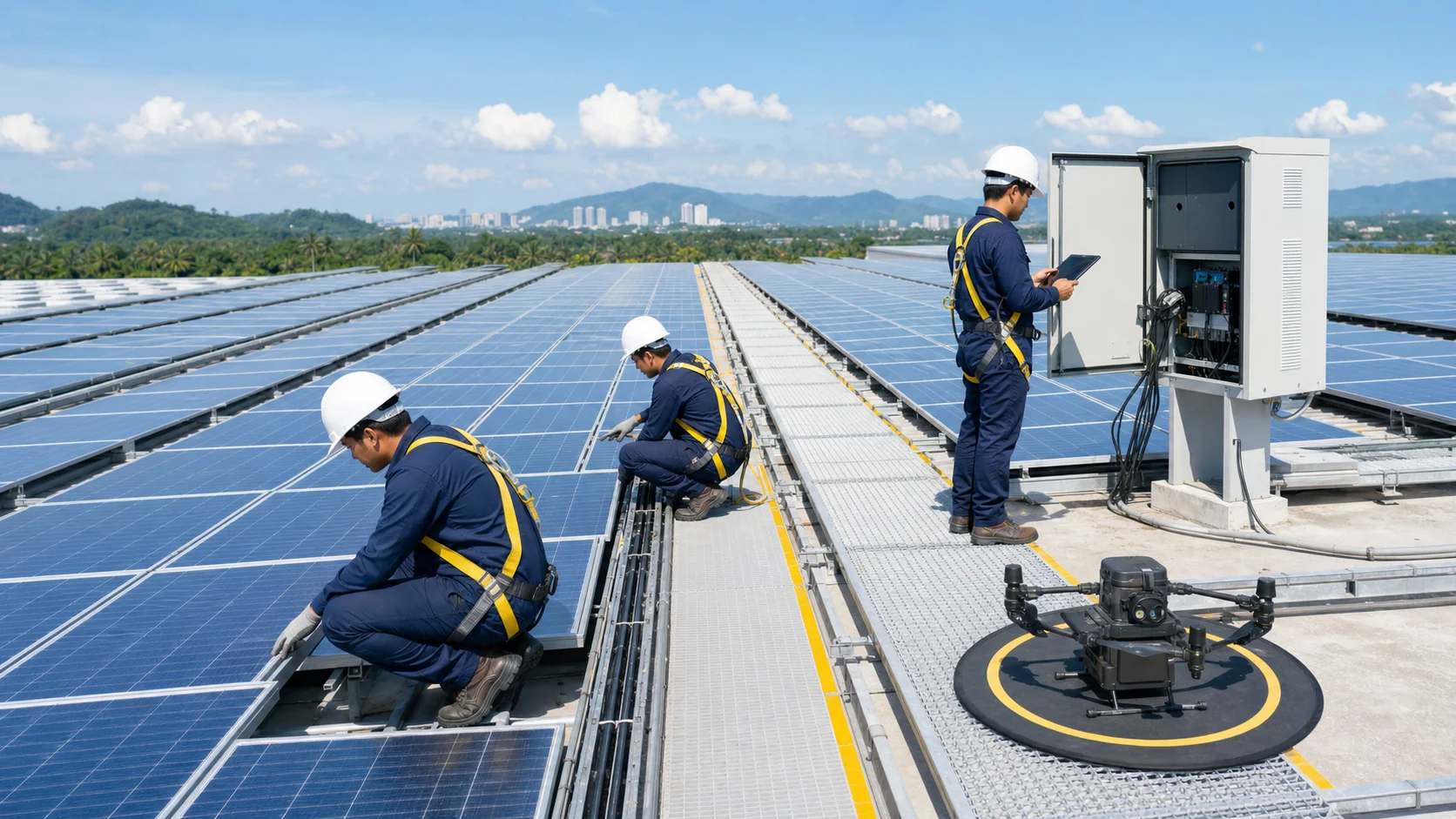
Solar panel maintenance in Malaysia works best as a site-specific routine rather than a fixed timetable. On a commercial roof it combines monitoring review, visual inspection, cleaning decisions, access planning and qualified electrical work. Cleaning is one maintenance activity, not a substitute for diagnosing faults or checking system condition.
A practical checklist gives the facility or solar asset team repeatable evidence: what was reviewed, which zones need attention, who owns each action and when the next review is due.
Quick answer: what should the maintenance cycle include?
Review monitoring trends, inspect representative modules and roof zones, note soiling and debris, confirm safe access, check the manufacturer and installer requirements covered in section 6 and document completed work.
Escalate electrical, structural or waterproofing issues to the appropriate qualified provider. Do not ask a cleaning team to certify conditions outside its scope.
Keep inspection, cleaning and electrical O&M separate
Assign three distinct scopes, even if one organisation handles more than one:
- Routine inspection and monitoring review – usually the facility team or asset owner.
- Cleaning – removing surface contamination from agreed modules with an approved method.
- Electrical and technical O&M – fault finding, testing, isolation and repairs by the site’s qualified PV or electrical provider.
A cleaning record can note a cracked module or a loose cable tie, but it is an observation, not an electrical inspection or a performance test. The agreed scope should say so.
1. Monitoring and production review
Compare current performance with expected conditions while accounting for weather, outages, temperature, curtailment and operational changes. A production change can be a signal, but it does not prove soiling is the cause.
Keep cleaning dates in the monitoring record so any change can be reviewed in context rather than attributed from memory. If the site wants to judge the effect of cleaning, agree the comparison method with the PV provider beforehand.
2. Visual inspection by roof zone
Divide the array into zones that reflect the roof, such as edges, rows near exhausts or vents and sections under trees. Different zones may soil at different rates, so record them separately.
Use wide photographs for layout and close-ups for condition. Note damaged modules, loose items, blocked drains and shading. Avoid stepping onto unverified roof areas simply to obtain a picture.
3. Soiling, vegetation and bird issues
Loose dust, bird droppings, leaf residue, industrial fallout and construction dust do not behave the same way. Rain can move loose material, but it may leave deposits along lower module edges and frames, and it may not remove bird droppings or bonded residue.
Overhanging trees and plant growth around the roof or array can drop leaves and cast shade. Trimming or vegetation removal is often outside a cleaning scope, so decide who is responsible. If birds regularly roost on the structure, record the affected rows; any deterrent measure is a separate decision for the asset owner.
4. Roof access and safety
Confirm the route from ground level to the array before any work is planned: stairs, ladders or hatches, edge protection, fragile roof sheets, skylights and sections that must stay off limits. Check activity below the roof, such as production areas, walkways and vehicle routes, because water, tools and people on the roof can affect them.
Agree weather stop-work conditions and a working window. Modules generate electricity in daylight, so follow the site’s electrical procedures and keep cleaning activity away from damaged cables, connectors, isolators and inverters unless handled by qualified personnel.
5. Where cleaning fits
Use site evidence and prior results to decide whether cleaning is justified. Localised bird deposits or edge build-up may call for targeted work rather than a full clean.
Select tools, water and access methods that fit the modules and roof. Drone-assisted cleaning may be assessed for suitable arrays, but it still needs safe operating space, water and runoff control and the correct approval route. CAAM’s public UAS guidance states that Standard Authorisation to Fly excludes spraying or dispensation, so a cleaning operation needs its approval path checked for the specific activity. See the CAAM UAS guidance. Ground-based, manual or specialist methods may be more suitable where close contact or restricted geometry requires them.
6. Manufacturer and installer requirements to check
Before approving any cleaning tool, material or access route, check:
- What cleaning methods, brushes, water quality and cleaning agents does the module manufacturer allow or prohibit?
- Do the module, mounting or roof warranties set conditions on cleaning, walking on the roof or contact with the modules?
- Does the installer or O&M contract require notice before third-party work, or define who may access the array?
- What isolation, shutdown or permit procedure does the site’s electrical provider require during cleaning?
7. Records and next actions
A maintenance record should identify date, weather, zones reviewed, work completed, exclusions, photographs, visible observations and responsible follow-up parties.
Set the next inspection date from site conditions rather than copying a universal interval. After several cycles, the records show which zones soil faster and whether cleaning has been useful.
What to send for a cleaning quote
A useful initial pack shows whether a site visit is needed:
- site location and the operating hours or restrictions that apply;
- panel count, system capacity or approximate array area, and a roof or layout plan if available;
- wide photographs of the whole array and close-ups of the main contamination;
- last cleaning date if known, and any recurring bird, dust or leaf issues;
- roof height, access route and known fragile or restricted areas;
- water source, drainage points and sensitive areas below the roof; and
- preferred work period and the site documents the contractor will need to provide.
Useful sources and related Skybot guides
NREL PV O&M guide, commercial solar cleaning guide, solar cleaning frequency guide, solar cleaning cost guide, Skybot quote form.
FAQ
Is cleaning part of solar maintenance?
Yes, when site evidence supports it. Commercial solar maintenance also includes monitoring review, visual inspection, access planning and qualified electrical work, and cleaning does not replace any of those.
How often should a solar maintenance checklist be used?
Set a site-specific inspection cycle based on dust and bird exposure, nearby activity, system value, access and prior observations. There is no reliable single interval for every commercial array, so review the cycle as records build up.
Can rain replace a solar panel inspection?
No. Rain may move loose dust but does not confirm that bird droppings, bonded residue, edge deposits, debris or faults are absent, and rain exposure can be uneven across a roof.
Who should investigate a solar performance drop?
A qualified PV or electrical service provider should investigate suspected system faults. Soiling is only one possible cause; shading, equipment faults, outages and monitoring problems can also affect output.
What should I check before approving a cleaning method?
Confirm that the proposed method, water and access route comply with the module manufacturer’s instructions, the relevant warranties and the site’s electrical procedures.
What solar maintenance records are most useful?
Dated zone photographs, monitoring notes, cleaning dates, completed zones, exclusions, visible observations and assigned follow-up actions with the next review date.
Request a site-specific review
Skybot Solution reviews commercial solar cleaning enquiries in Johor and other Malaysian locations. Send the location, array photographs, panel count or capacity, access notes and the result you expect through the Skybot quote form, and Skybot will identify the next assessment step.
Cleaning within a maintenance plan is covered by Skybot’s commercial solar panel cleaning service.