Solar panel cleaning cost in Malaysia should be quoted from the actual site rather than one universal rate. The final scope depends on the number of panels, roof or ground access, array layout, soiling condition, water availability, surrounding hazards, work timing, documentation, and the cleaning method selected.
For a useful first estimate, a facility or solar asset team should prepare the site location, panel count or system size, recent photographs, roof type, access restrictions, water details, and any performance or inspection records. This guide explains the cost factors and the questions to ask before requesting a proposal from Skybot Solution.
How is solar panel cleaning priced in Malaysia?
Commercial solar cleaning may be assessed by panel count, installed capacity, array area, work duration, or a complete site scope. The pricing unit is less important than what the quotation includes. Two sites with the same number of panels can require different planning when one is ground-mounted and the other is on an elevated factory roof with restricted access.
A clear quotation should identify the cleaning area, proposed method, mobilisation, water and equipment assumptions, operating window, exclusions, safety controls, documentation, and whether a test section or site visit is required. If the provider cannot explain these assumptions, comparing headline prices alone will be misleading.
Eight factors that affect solar panel cleaning cost
1. Panel count and array area
The number of modules, installed capacity, row length, spacing, and total array area affect the amount of work. A layout drawing is useful, but recent wide photographs can support an initial review.
2. Roof height, pitch, and access
Ground-mounted arrays, low commercial roofs, steep roofs, and large elevated rooftops require different access planning. Stairways, ladders, roof hatches, edge protection, loading limits, fragile roof sections, and restricted zones can affect the selected method and mobilisation.
3. Type and severity of soiling
Loose dust, bird droppings, organic debris, construction residue, industrial fallout, and mineral marks may not respond to the same process. Close-up photographs help the contractor assess whether the scope needs testing, repeat passes, water treatment, or another method.
4. Array layout and surrounding equipment
Panel tilt, row spacing, cable routes, inverters, roof equipment, skylights, vents, and narrow service paths affect how the team can move equipment and control the work area. A simple rectangular array may be easier to plan than several separated roof zones.
5. Water source and runoff
The proposal should state where water comes from, whether its quality is suitable for the intended process, how hoses or equipment will be routed, and where runoff will travel. Food areas, sensitive equipment, landscaping, open drains, or neighbouring property may require additional controls.
6. Operating environment
Factories, warehouses, shopping properties, schools, hospitals, and active logistics sites have different operating restrictions. Security induction, traffic control, tenant coordination, shutdown windows, public access, and weekend work can change the plan.
7. Cleaning method
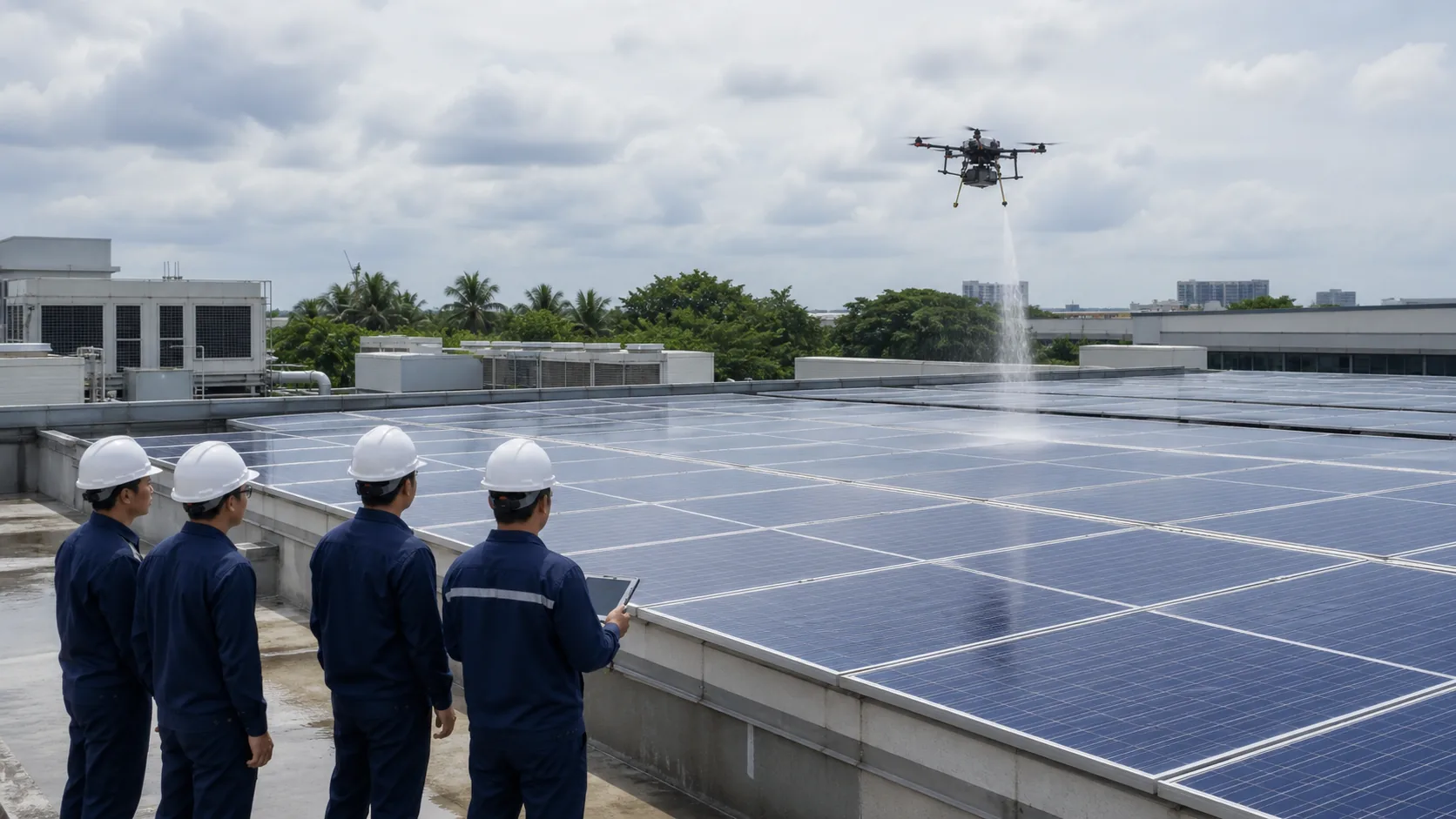
Ground tools, water-fed systems, direct-access technicians, mobile platforms, and drone-assisted cleaning each have different equipment and access requirements. The right comparison is not simply manual versus drone; it is which method can treat the actual surface while controlling the site risks and disruption.
8. Documentation and approval requirements
Commercial sites may request a method statement, risk controls, insurance documents, staff or equipment details, permits, photographs, completion records, or coordination meetings. These requirements should be identified before the quotation is confirmed.
Solar panel cleaning methods compared
| Method | May suit | Important checks |
|---|---|---|
| Ground-based or water-fed equipment | Reachable arrays with workable access around the panel rows | Reach, water quality, pole control, electrical equipment, runoff, and operator access |
| Direct-access manual cleaning | Arrays where technicians can access the work area under an approved roof-safety plan | Roof condition, fall protection, panel and cable protection, walking routes, and manufacturer guidance |
| Mobile elevated work platform | Reachable roof edges or structures with firm vehicle access | Machine reach, ground loading, overhead obstacles, traffic control, and positioning |
| Drone-assisted cleaning | Selected elevated or extensive arrays with suitable operating and ground-control space | Panel compatibility, flight environment, water delivery, runoff, weather, exclusion zone, and applicable approvals |
Some sites need a mixed approach. A drone-assisted system may cover broad sections while direct-access work handles specific marks or areas that need closer contact. The quotation should state which sections each method covers.
Why site-specific condition matters more than a fixed cleaning interval
Soiling can reduce solar energy yield, but its effect varies by location, weather, panel tilt, nearby activity, and the type of material on the modules. The IEA Photovoltaic Power Systems Programme recommends site-specific measurement and cleaning strategies rather than assuming one schedule works everywhere.
Malaysia’s high humidity and substantial rainfall also do not remove every kind of residue. METMalaysia’s climate overview describes the country’s generally high humidity and abundant rainfall, but building conditions still vary. Arrays near construction, active roads, birds, vegetation, industry, or coastal exposure may behave differently from a sheltered site.
A practical maintenance decision can combine visual inspection, inverter or monitoring data, previous cleaning records, known site activity, and the module manufacturer’s cleaning guidance. This is more defensible than promising that every Johor array needs a fixed number of cleans each year.
When drone-assisted solar cleaning may be worth assessing
Drone-assisted cleaning may be useful when the array is extensive, elevated, difficult to reach, or surrounded by access constraints. It can reduce the amount of direct roof movement for suitable sections, but it should not be treated as a universal replacement for every manual method.
A site review should confirm:
- the module surface, coating, frames, seals, cables, and visible condition;
- the type of dirt or residue and whether it needs direct contact;
- the roof, flight, and ground-control environment;
- wind and weather limits;
- water source, delivery, and runoff;
- nearby people, traffic, equipment, and property; and
- the operational and regulatory approval path.
For a wider explanation of the method, read the drone cleaning Malaysia guide.
Malaysia drone-operation planning
Drone operations in Malaysia are regulated. As of July 2026, the Civil Aviation Authority of Malaysia’s UAS guidance states that Standard Authorisation to Fly applies to specified low-risk operations and excludes spraying or dispensing. A contractor should therefore verify the approval path that applies to the proposed cleaning equipment, payload, location, and operation rather than assuming a Standard ATF covers the work.
This article is an operational planning guide, not legal advice. Requirements may change and can depend on the aircraft, payload, site, airspace, operating method, and other authorities or property controls.
What to send for a solar panel cleaning quotation
Send the following information for a more useful initial review:
- site name and location;
- panel count, installed capacity, or approximate array area;
- wide photographs of the whole array;
- close-up photographs of the main dirt or marks;
- roof type, number of levels, and access route;
- layout drawings when available;
- water source and drainage information;
- nearby equipment, roads, walkways, or active operations;
- preferred working period and site-document requirements; and
- the expected result or reason for cleaning.
Skybot can review the information, identify gaps, and advise whether a site assessment is needed. See the Skybot service process for the normal enquiry-to-scope flow.
Questions to ask before accepting a quotation
- Which panels and roof sections are included?
- What cleaning and access method is proposed, and why?
- What water quality or cleaning materials will be used?
- Is a test section recommended?
- How will panels, cables, inverters, roof materials, and drainage be protected?
- What weather or site condition would stop the work?
- What approvals and site documents apply?
- How will completion and exceptions be recorded?
- Which marks may need another method or may remain?
FAQ: Solar Panel Cleaning Cost Malaysia
Can Skybot give an exact solar cleaning price from photographs?
Photographs can support an initial assessment, but a firm proposal may require measurements, operational details, or a site visit. Panel count, access, roof condition, soiling, water, surrounding hazards, documentation, and the selected method can all affect the scope.
Is solar panel cleaning priced per panel?
It can be, but providers may also use installed capacity, array area, work duration, or a complete site scope. Ask what is included rather than comparing the pricing unit alone.
How often should commercial solar panels be cleaned in Johor?
Use the actual site condition, monitoring data, nearby activity, weather exposure, previous maintenance, and manufacturer guidance. There is no reliable fixed interval for every commercial array.
Can drone cleaning replace manual solar panel cleaning?
It may reduce direct roof access for suitable sections, but some marks, layouts, or panel conditions may still require direct-access work or another method. The site and surface should be assessed first.
Does rain clean solar panels completely?
Rain may remove some loose dust, but it may not remove bird droppings, attached debris, industrial residue, or mineral marks. Inspect the modules and performance information instead of assuming rainfall has restored the surface.
What is the first step for a Johor solar cleaning quote?
Send the site location, panel count or system size, wide and close-up photographs, roof and access details, water information, and any operating restrictions. Skybot can then review method suitability and the information needed for a proposal.
Request a solar panel cleaning assessment
A useful quotation begins with the real array—not a generic price promise. Request a Skybot solar panel cleaning review with the location, photographs, system size, roof type, and access notes. The team will confirm what else is needed before proposing the cleaning scope.