
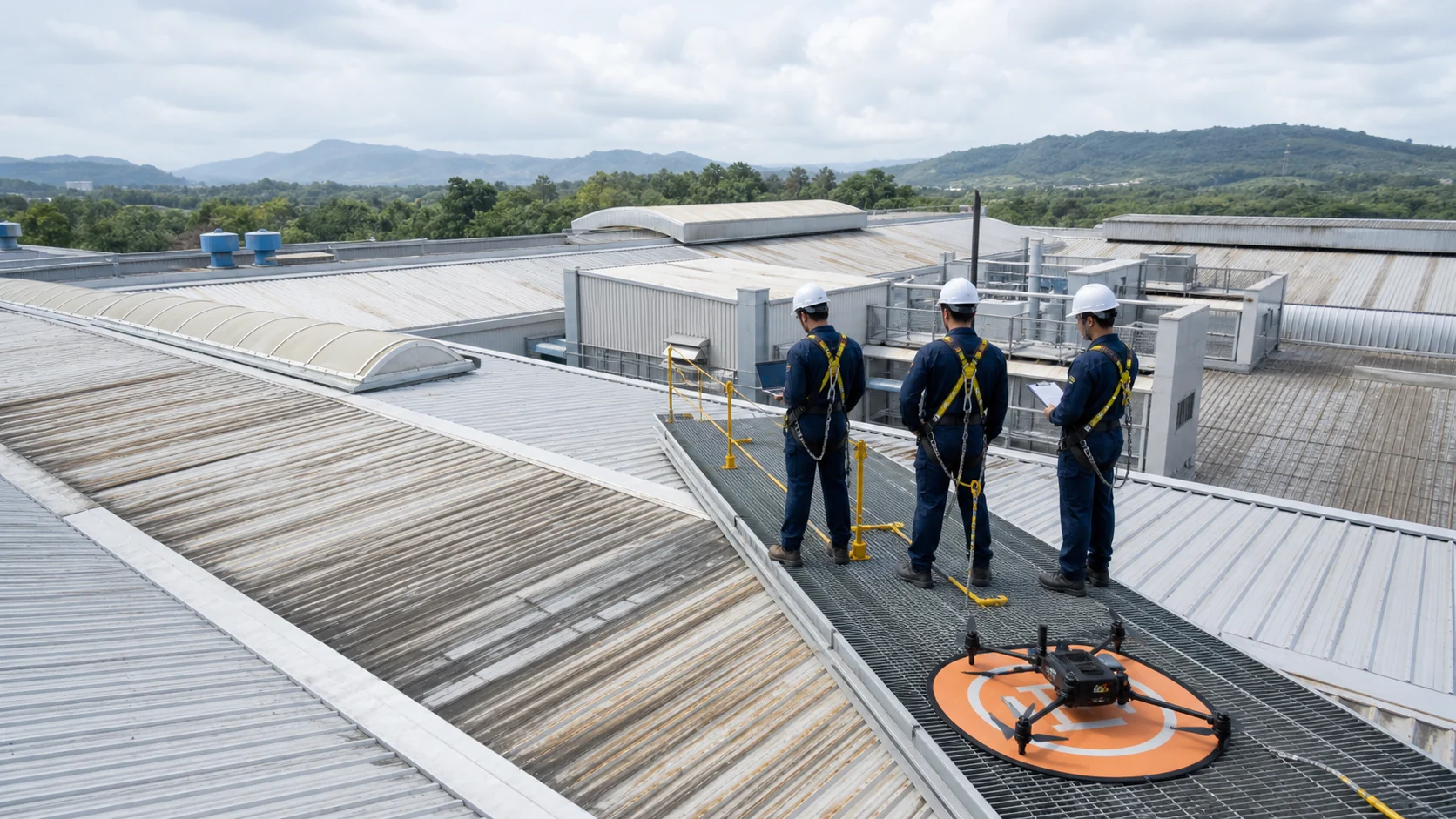
industrial rooftop cleaning Malaysia is a practical planning question for Malaysian facility teams.
Industrial rooftop cleaning in Malaysia is an access and operations project before it is a washing task. Roof material, fragile sections, skylights, drainage, contamination, production activity and equipment below can change the method and the working window.
A useful first review should determine why the roof needs cleaning, which zones are included, what result is realistic and how the work can be completed without creating uncontrolled water, fall, electrical or production risks.
Quick answer: what determines the method?
The decision depends on roof type and condition, slope, height, safe access, contamination, drainage, nearby equipment, worker movement, flight space and the need for direct surface contact.
Drone-assisted cleaning may be assessed for selected broad roof areas. Direct-access tools, platforms or a mixed method may be needed for detailed deposits, gutters, repairs or locations where flight and water control are unsuitable.
1. Confirm the roof condition and load limits
Metal sheets, membranes, concrete roofs and coated surfaces have different limits. Fragile sheets, corrosion, loose fixings, skylights and previous repairs should be identified before personnel or equipment move across the roof.
Cleaning is not a structural assessment. Suspected defects should be referred to the property team and an appropriate roof specialist.
2. Map safe access and movement
Record stairs, ladders, roof hatches, walkways, edges, fragile zones and equipment transfer routes. The plan should minimise unnecessary travel across the roof.
Where direct access is required, the contractor should explain fall prevention, edge control and how hoses or tools will be managed without creating trip or damage risks.
3. Understand the contamination
Loose dust, moss, leaves, bird deposits, industrial fallout and oily residue may require different treatment. A close-up sample or test area can prevent an unsuitable method being applied across the full roof.
Cleaning products must be compatible with the roof and surrounding drainage. Permanent corrosion or coating failure will not be corrected by washing.
4. Coordinate with production and utilities
Air intakes, exhausts, solar arrays, cables, roof-mounted equipment and active loading areas can affect the plan. Water should not enter production areas or contact equipment outside the approved scope.
Facility, safety, security and production representatives should agree on working hours, isolation boundaries and communication before mobilisation.
5. Control water and drainage
Blocked drains can turn cleaning water into ponding or uncontrolled overflow. Inspect likely runoff paths and identify where debris will be collected.
Do not push roof contamination into gutters without a disposal plan. The scope should state whether gutter clearing is included or handled separately.
Planning checklist
- Roof material and visible condition
- Safe access and fragile zones
- Included roof areas and exclusions
- Contamination and test-area needs
- Water source and drainage path
- Production, air intake and equipment boundaries
- Method, weather and stop-work limits
- Reporting and defect observations
Useful sources and related Skybot guides
DOSH work-at-height guidance, drone cleaning Malaysia overview, drone cleaning site assessment guide, Skybot process, Skybot quote form.
Common mistakes
- Treating every roof as pressure-wash suitable
- Walking equipment across unverified fragile areas
- Ignoring blocked drains and production air intakes
- Assuming cleaning repairs corrosion or failed coatings
- Requesting one price without defining the roof zones
FAQ
Can drones clean industrial roofs?
They may suit selected broad areas after the roof, flight space, water system, surrounding activity and approval route are assessed.
Can a roof cleaning team inspect the roof structure?
No. Cleaning teams can record visible observations, but structural, waterproofing and electrical inspections require the appropriate specialists.
Can factory operations continue during cleaning?
Possibly, but the work must be coordinated around air intakes, loading, electrical equipment, people below and runoff. Some zones may need isolation.
Should gutters be included in an industrial roof cleaning scope?
Only if the scope says so. Gutter access, debris removal and disposal can require separate planning.
What roof details should I send for an initial review?
Send roof photographs, access details, approximate area, roof material, contamination, water points, drains, equipment locations and operating restrictions.
Request a site-specific review
Skybot Solution can review commercial exterior-cleaning enquiries in Johor. Send the location, photographs, target areas, access notes and expected result through the Skybot quote form. The team will identify what else is needed before a method or proposal is confirmed.
See how Skybot plans industrial rooftop cleaning in Johor.